

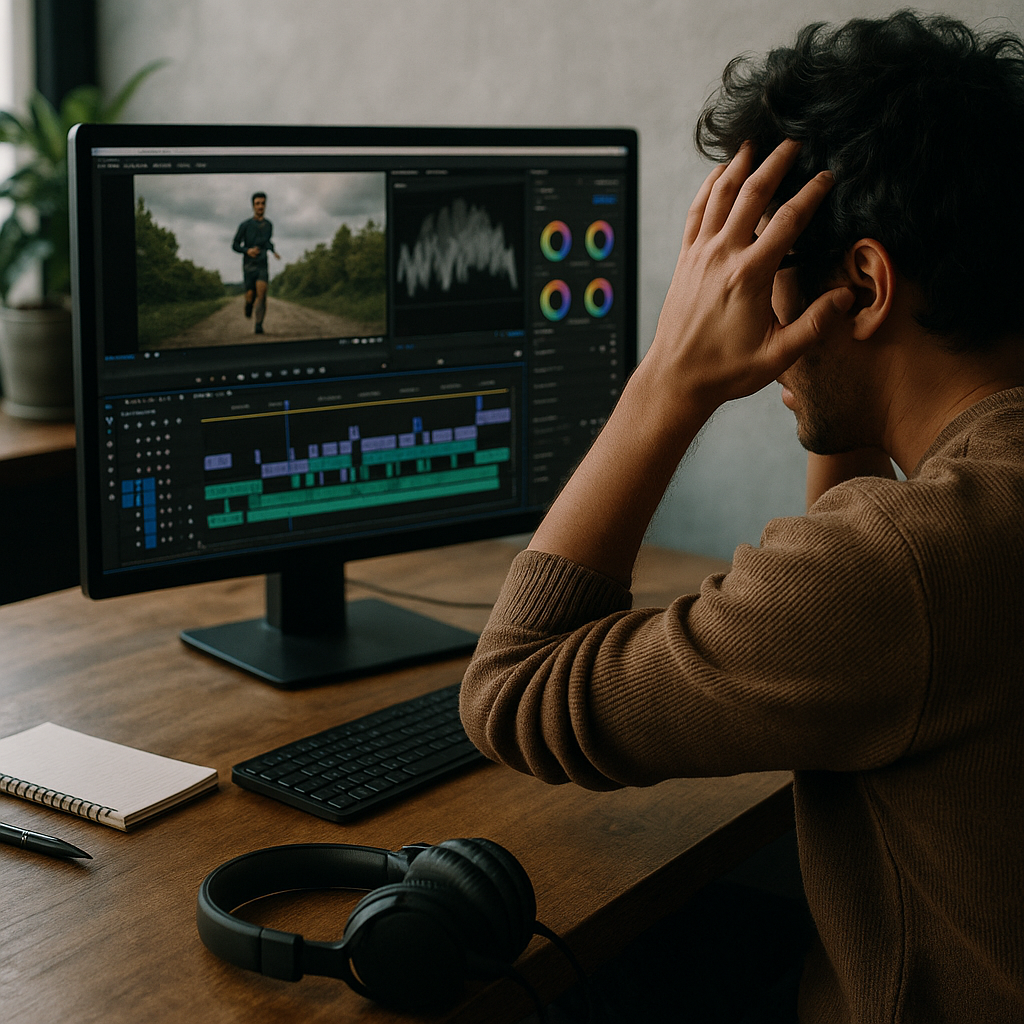
Look, I’ve been in this game for a while now… and if there’s one thing I know, it’s that video editing can be a real pain sometimes. Even when you’ve got all the fancy software and the latest tech, there’s still stuff that trips people up.
So let me break down what I see happening in editing bays across Melbourne (and honestly, everywhere else too).
## **The Time Monster**
This is the big one. The absolute killer. You think you’ll knock out that corporate video in a couple hours? Yeah right. Next thing you know it’s 2am and you’re still tweaking that one transition that just doesn’t feel right.
Here’s what eats up time:
– Waiting for renders (and then realizing you need to change something)
– Going back and forth with client feedback
– Finding that *perfect* piece of music that doesn’t cost a fortune
– Color correction… oh man, color correction
And don’t even get me started on when the client says “can we just make a few small changes?” Those small changes? They’re never small.
## **The Tech Headache**
Computers crash. Files corrupt. Software updates break everything that was working perfectly fine yesterday.
I remember working on this training video for a client in Ballarat… everything was going smooth until my editing software decided to update itself overnight. Boom. Half my plugins stopped working. Had to spend the entire morning troubleshooting instead of actually editing.
**Pro tip:** Always keep backups. Like, obsessive amounts of backups. Trust me on this one.
## **The “Make It Pop” Problem**
Clients love saying this. “Can you make it pop more?” What does that even mean??
Usually it means:
– They want it to look like that viral video they saw
– But with their budget
– And by tomorrow
– Oh, and can you add some “pizzazz”?
The real challenge is translating vague feedback into actual changes. This is where having a solid process helps – storyboards, style frames, regular check-ins. Otherwise you’re just guessing what’s in their head.
## **File Management Nightmare**
You start with a nice organized folder structure. By week 2, you’ve got:
– Final_v1
– Final_v2
– Final_FINAL
– Final_FINAL_really
– Final_FINAL_CLIENT_APPROVED
– Final_FINAL_CLIENT_APPROVED_onemorchange
And somewhere in there is the actual final version. Maybe.
## **The Budget vs Quality Battle**
Everyone wants Hollywood quality on a shoestring budget. I get it, really I do. But here’s the thing – good editing takes time. And time costs money.
You can:
– Rush it and get something mediocre
– Take your time and get something great
– Try to do both and burn yourself out
Guess which one happens most often?
## **Audio… The Forgotten Child**
So many people focus on the visuals and forget that bad audio will tank your video faster than anything else.
Common audio headaches:
– Background noise nobody noticed during filming
– Music that’s too loud/too quiet/too cheesy
– Dialog that sounds like it was recorded in a tin can
– That one clip where someone bumped the mic
## **The Export Maze**
Okay your edit is done. Now what format do they need?
– MP4 for web?
– ProRes for broadcast?
– Something specific for their ancient company system?
– “Can you make it smaller but keep the quality exactly the same?”
And then you export it and realize the colors look different on their screen than yours. Back to the drawing board.
## **Working With Multiple Stakeholders**
When you’re editing a corporate video, suddenly everyone’s a critic. The CEO wants one thing, marketing wants another, and Jim from accounting has “some thoughts” too.
Managing all that feedback without losing your mind (or the video’s coherent message) is… yeah, it’s tough.
## **So What Do You Do?**
Honestly? You need a good team. You need clear processes. You need realistic timelines. And you need clients who trust you.
That’s why working with an experienced video production crew makes such a difference. They’ve been through these headaches before. They know how to avoid the common pitfalls. They’ve got systems in place.
Because at the end of the day, video editing challenges aren’t really about the technical stuff. Sure, that’s part of it. But mostly it’s about communication, planning, and experience.
Get those right, and suddenly those “impossible” problems become a lot more manageable.
*Now if you’ll excuse me, I need to go find Final_FINAL_v3_actuallyfinal_forthisweek.mp4…*
